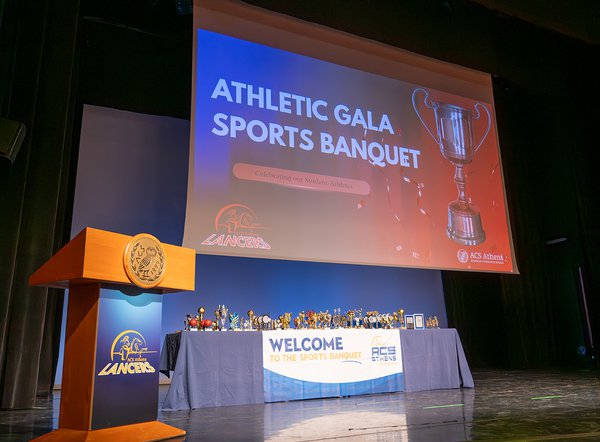
The ACS Athens Elementary School team of educators consists of dedicated professionals who bring unique experiences and expertise...
Read more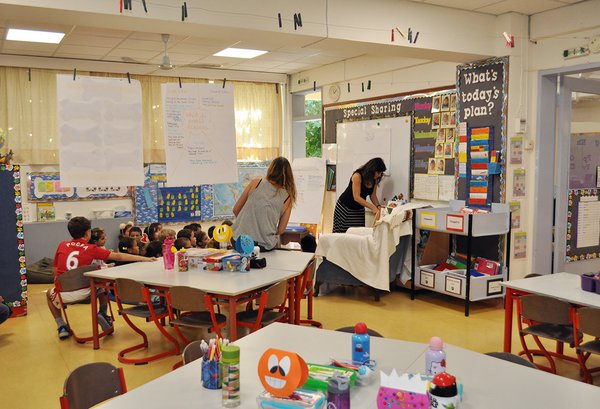










I warmly welcome our new families and students to ACS Athens and extend a heartfelt welcome back to our returning students and families. It is truly gratifying to work alongside such outstanding educational leaders, faculty, and staff in a shared and purposeful venture: educating the world's most valued citizens—the young citizens and leaders of tomorrow.
Read MoreAbout ACS Athens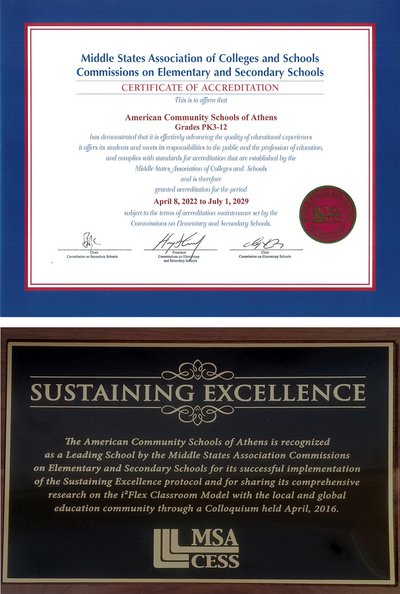
ACS Athens is accredited by the Middle States Association of Colleges and Schools and is granted accreditation until 2029.
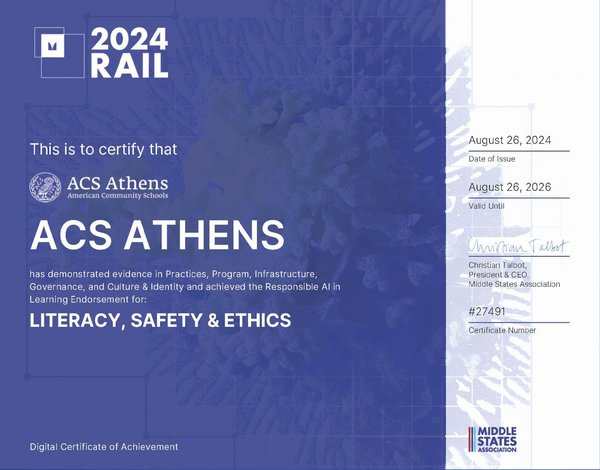
Read MoreACS Athens was amongst the first 10 schools worldwide to receive the RAIL (Responsible Artificial Intelligence Learning) endorsement pioneered by the Middle States Association, in August 2024.
The ACS Athens Elementary School team of educators consists of dedicated professionals who bring unique experiences and expertise...
Read more
The administration, faculty, staff, students, and community of the ACS Athens Middle School are devoted to academic achievement and...
Read more
The ACS Athens Academy is a comprehensive four-year high school enrolling 400 students in grades 9 through 12. The Academy's diverse...
Read more
The IB program is an integral part of the Academy's academic offerings, where students may take the full Diploma Program or combine...
Read more
The Institute of ACS Athens is a forward-thinking nonprofit organization that supports ACS Athens in a rapidly-changing world. By serving as a bridge engaging corporations, universities and non-profit organizations, we anticipate emerging dynamics and explore shifting paradigms to provide innovative programs and tools that advance learning and enhance skills so individuals of all ages can improve life and living on the planet.
Academies Masterclasses Knowledge Series EventsACS Athens produces a wealth of publications, articles, academic papers each year. From the Ethos Magazine, published since 2006, to the school Handbooks.
Read More